The partnership assembling this consortium is not itself a construction or engineering contractor. Its role is to structure and govern a competitive delivery process through which the client can select the strongest combination of international design and engineering expertise, regional construction capability and local delivery — then to hold that consortium together through delivery.
For that model to be credible, the client needs evidence that the Western anchor of the consortium can actually deliver airports in this region at the scale and standard required. This document provides that evidence for Arup, the British engineering and design consultancy that the partnership is positioned to convene as the proposed lead designer and engineering partner.
The case studies are drawn from Arup’s own published project record and from client announcements. They demonstrate what the firm has actually been appointed to do in this region — not what it proposes to do. Sections describing the Laos engagement are factual: they record published agreements and procurement positions, and make no claim about outcomes.
Arup is a member of the British Aviation Group (BAG), the UK aviation industry body whose Airport Consultants Group promotes member firms internationally. The partnership’s role is convening and governance; appointment of any consultant, contractor or consortium leader remains a decision for the client at the appropriate project stage.
Arup is an independent firm of planners, designers, engineers and consultants, founded in London in 1946 and owned by its employees rather than external shareholders. The firm describes itself as a collective of approximately 16,000 professionals working across 140 countries.
In aviation, Arup states that it has been involved in aviation development for over 70 years, with assignments at more than 100 airports worldwide, and that it has advised the majority of the world’s leading airports. It is recognised as a global leader in airport masterplanning, terminal and support-facility design, and specialist aviation services.
From masterplanning and feasibility through terminal and airfield engineering, digital passenger systems, baggage handling, operational readiness and sustainability — Arup covers the full lifecycle of an airport asset, from first strategic study to opening day and beyond.

Arup’s aviation work spans the entire airport lifecycle — from strategic masterplan to detailed engineering, systems integration, operational readiness and long-term asset management.
Physical design of airport structures at every scale: control towers, passenger terminals, cargo and maintenance facilities, and airfield assets including runways, taxiways and aprons. The practice states it has worked at the leading edge of aviation infrastructure design for over 60 years.
Strategic and commercial planning for airport owners, operators, developers, airlines and regulators — long-term masterplans, mid-term capital investment plans, feasibility studies and planning submissions, at scales from regional airports to capital-city hubs.
Operational performance consulting, asset management, baggage handling systems, passenger information systems and logistics strategy. Independent advisory across planning, design and implementation.
A defined Arup service: preparing airport operators for successful opening day — trials, staff training, transition planning and cutover management for new terminals and facilities.
Security and risk planning; decarbonisation and energy strategy for airport estates; and emerging areas including advanced air mobility and hydrogen readiness.
Arup states its aviation experience ranges “from many of the world’s largest international hubs to award-winning smaller regional airports” — the scale band within which Lao regional airport projects sit.
Arup does not serve Southeast Asia from London. It maintains a permanent regional aviation organisation led from Singapore and Hong Kong, with named business leaders for Southeast Asia and Australasia.
| Role | Location |
|---|---|
| Global Aviation Leader | New York, USA |
| Asia Pacific (APAC) Aviation Leader | Hong Kong |
| Aviation Business Leader, Southeast Asia | Singapore |
| Aviation Business Leader, Australasia | Singapore |
Established in 1968, Arup’s Singapore office employs more than 350 professionals across specialist disciplines and has delivered landmark Singapore developments including Marina Bay Sands and the Helix. The office serves as the regional aviation hub.
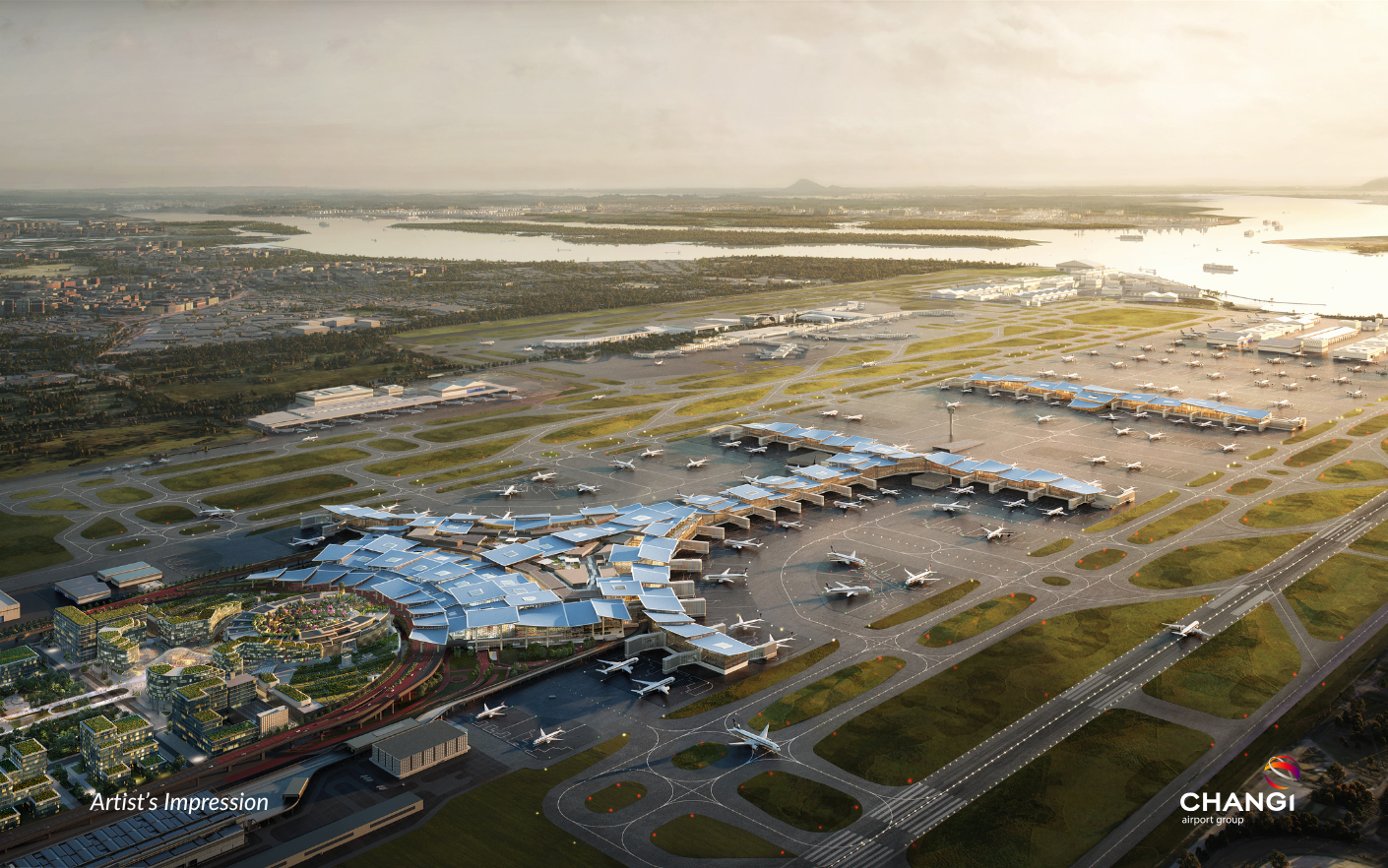
Arup’s Singapore aviation team has been part of the Master Building Consultants for Changi Airport Terminal 5 since 2023, leading design integration across specialist engineering disciplines and airport planning — one of the largest airport projects anywhere in the world.
Arup is a member of the British Aviation Group and its Airport Consultants Group — the UK body representing aviation design, engineering and consultancy firms internationally.

Four Arup engagements in Vietnam, Singapore and Laos form the core of its ASEAN airport record. Wider regional credentials follow the table.
| Airport / programme | Country | Arup role | Status |
|---|---|---|---|
| Long Thanh International Airport — terminal building | Vietnam | Structural & civil engineering, detailed design | In development |
| Changi Airport Terminal 5 | Singapore | Master Building & Master Civil consultant — engineering consortium | Groundbreaking May 2025; opening mid-2030s |
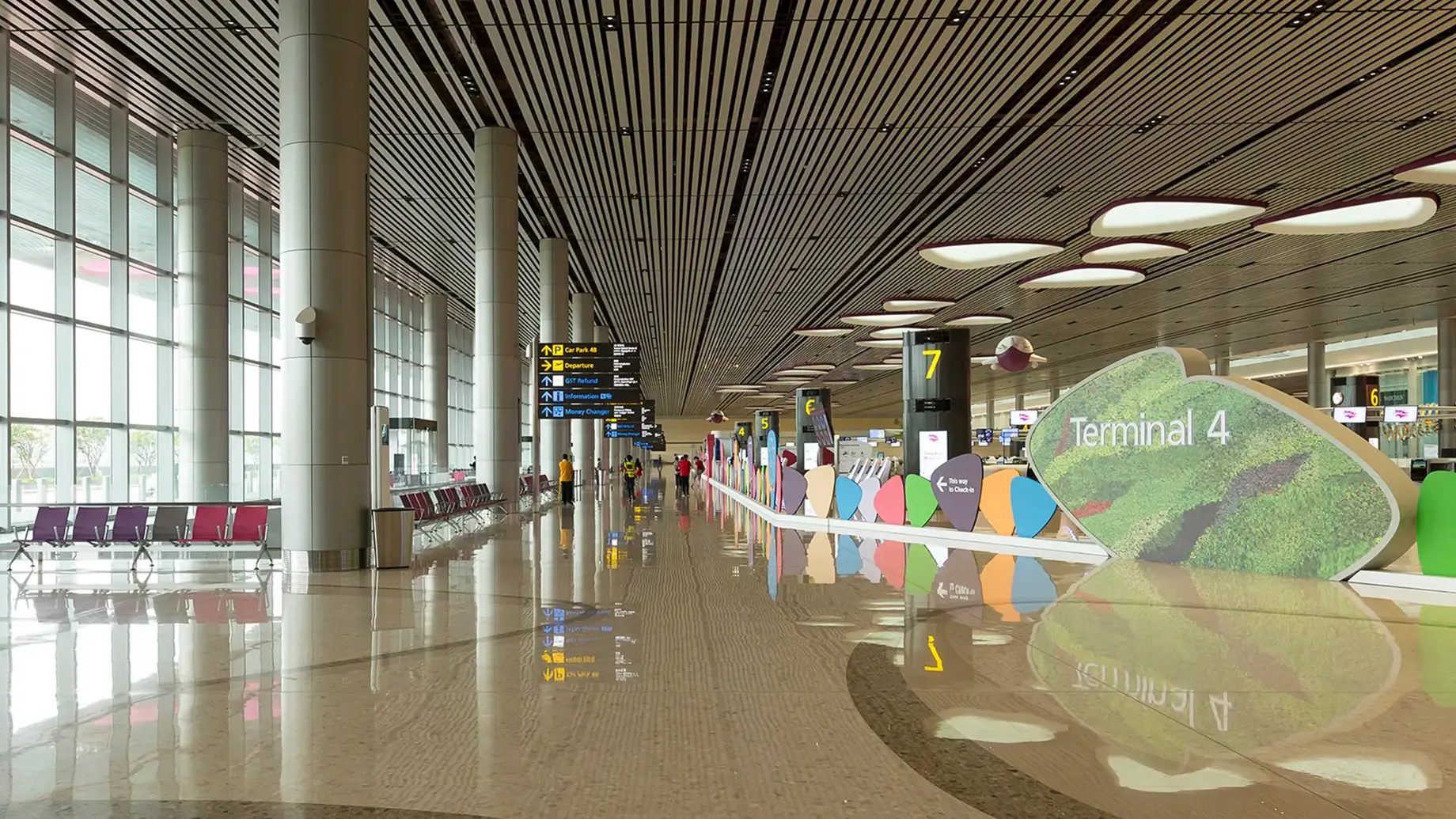
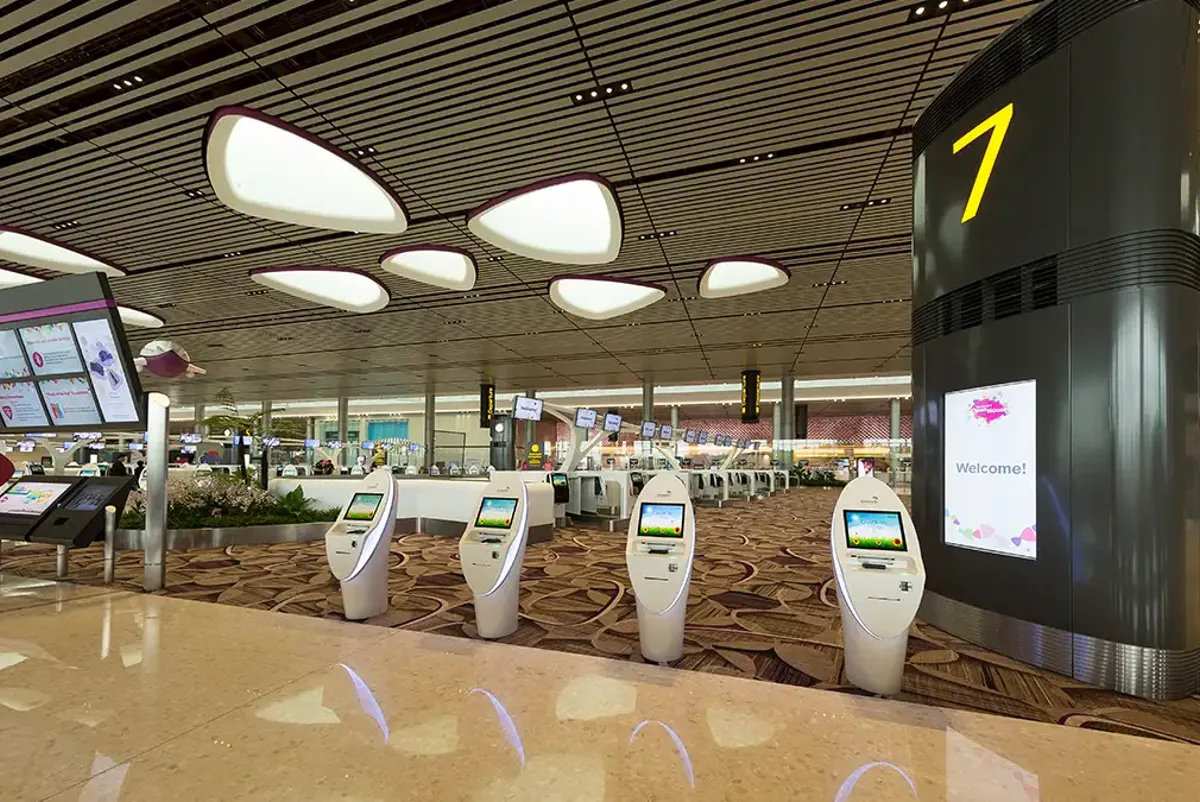
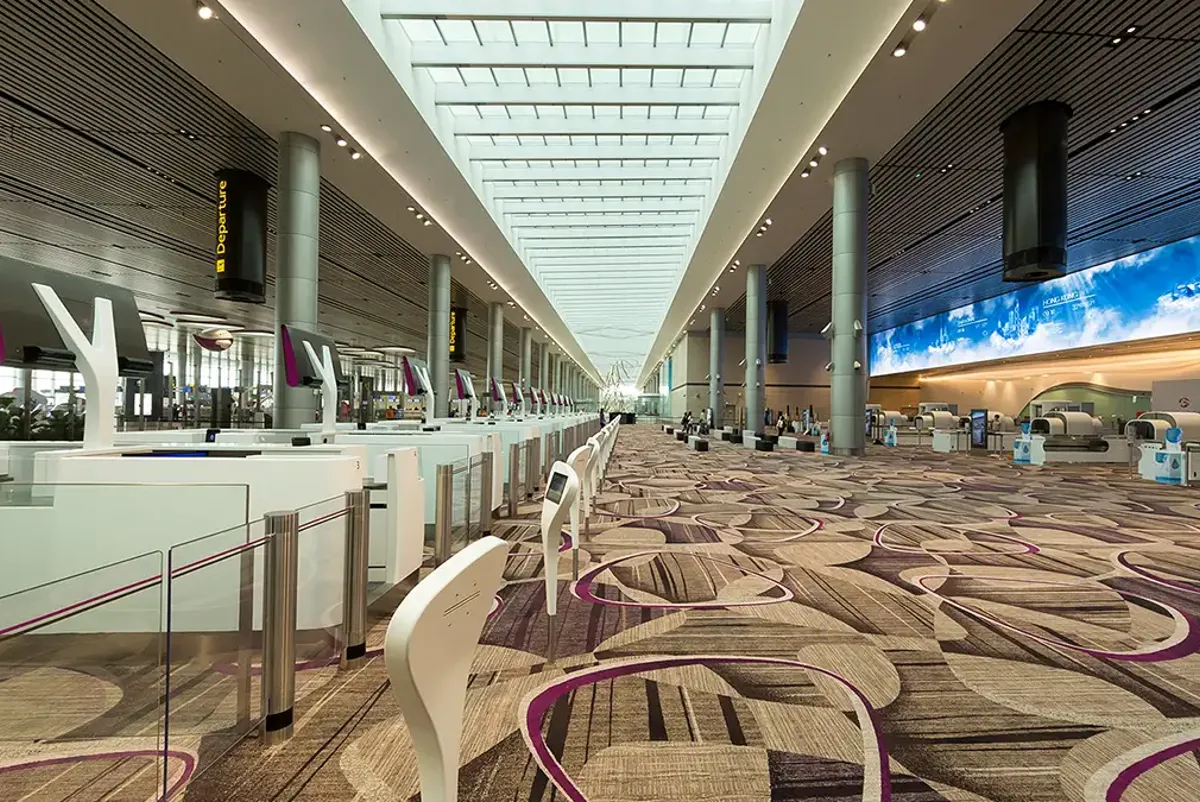
| Changi Airport Terminal 4 | Singapore | IIDS engineering, PM, tendering & ORAT; façade engineering | Opened Oct 2017 |
| Laos airport programme — PSVG feasibility study; Luang Prabang PPP bid | Laos | Consultancy partner to Phongsavanh Group | Feasibility agreement 2022; PPP prequalified 2025 |
The Laos engagements make Arup the only member of the British Aviation Group with a documented, minister-witnessed working relationship inside Lao airport development — and the only one that has taken a Lao airport project to PPP prequalification.

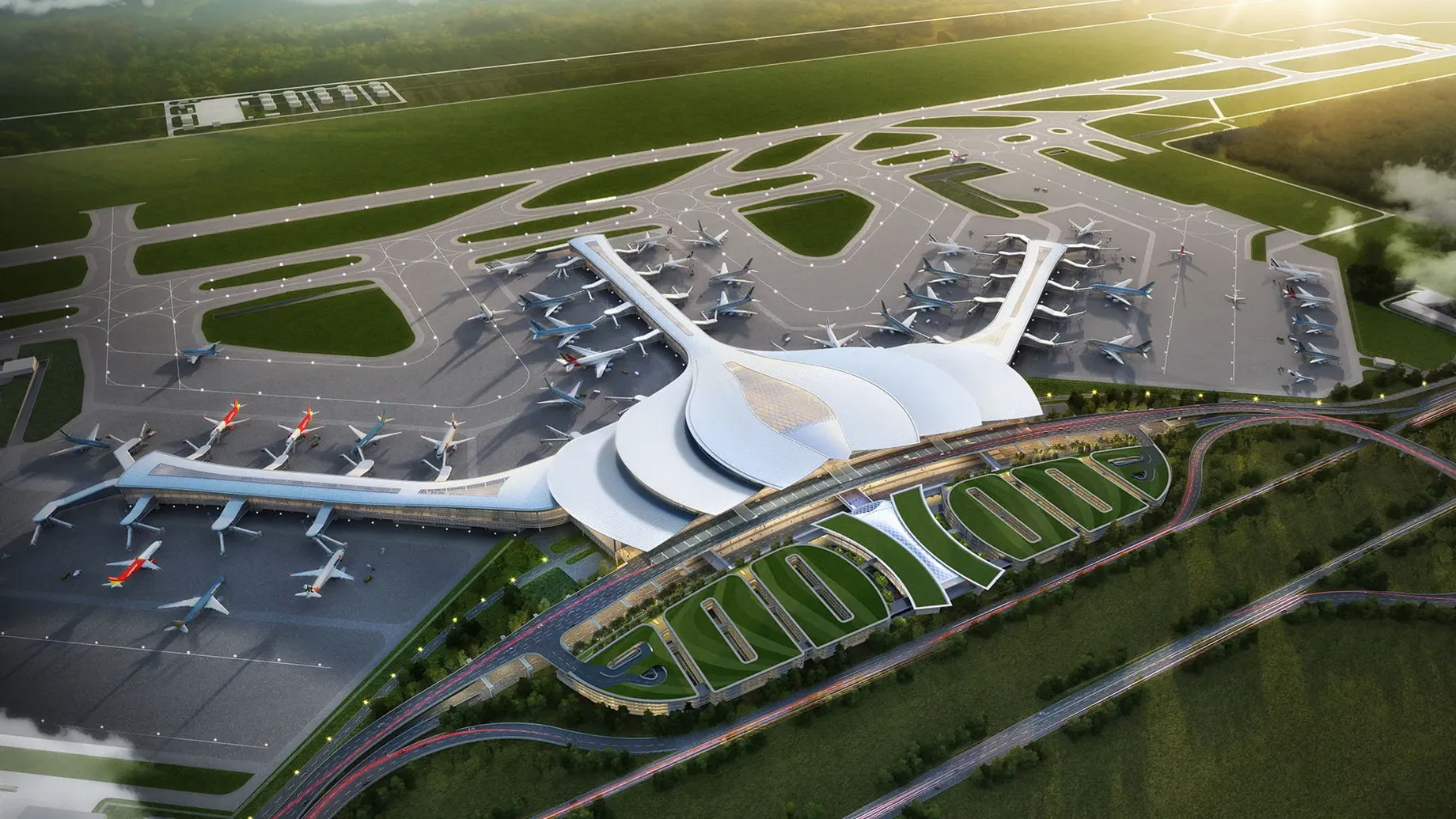
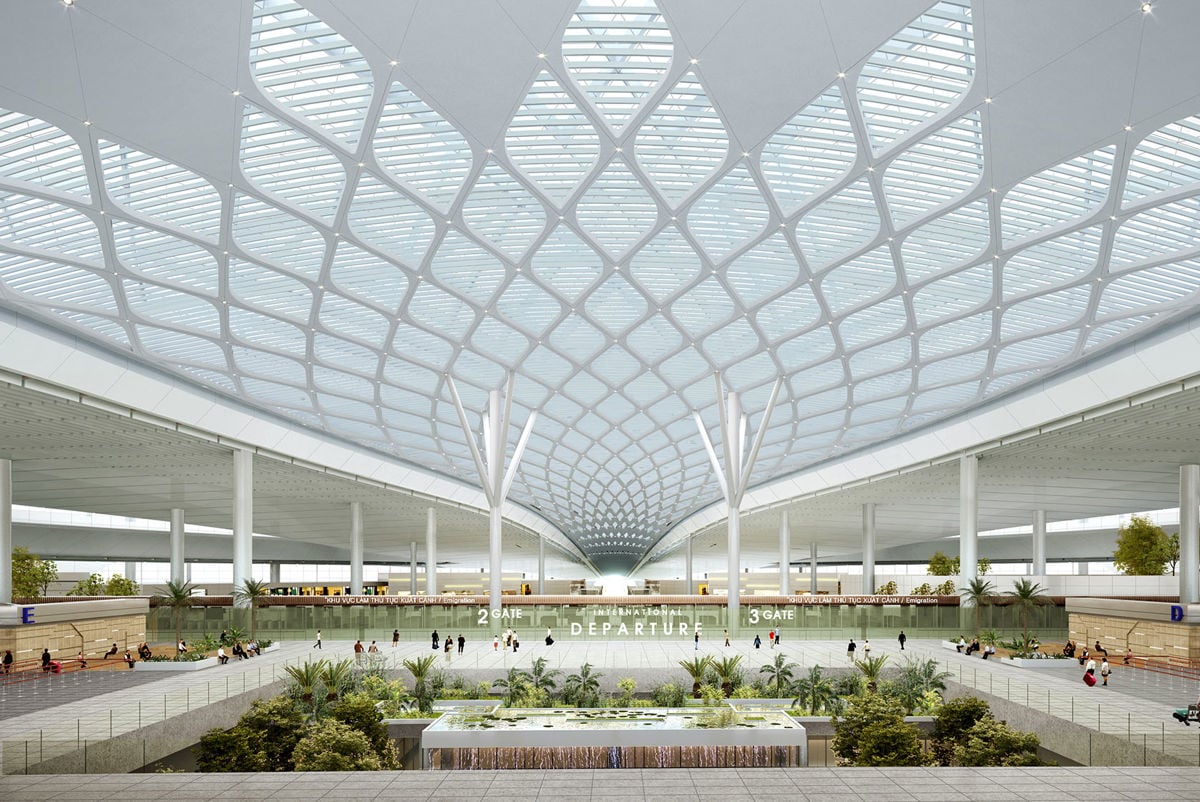
Located 40km east of Ho Chi Minh City, Long Thanh is Vietnam’s largest modern international airport and its designated second gateway for the southern metropolis. Conceived by Heerim Architects in the form of a blooming lotus, the terminal presents one of the most geometrically complex structures in regional aviation.
Arup is the structural engineering and civil engineering consultant for the detailed design stage of the terminal building — the engineering spine of the project, working inside a team led by the client’s own structures.
Heerim Architects & Planners (architect); Consultant & Inspection Joint Stock Company of Construction Technology and Equipment; NACO BV Airport Engineering Consultancy & Services via joint venture.
The lotus-inspired form produces a highly complex roof geometry that had to be rationalised, analysed and detailed inside a tight programme. Arup’s structural team used digital modelling tools — Rhino/Grasshopper feeding the GSA analysis model — to keep the analysis model continuously updated as the geometry evolved.

Long Thanh is being designed for growth on a regional scale: phase one handles 25 million passengers a year, with infrastructure planned to scale beyond 100 million at ultimate completion. Arup’s assessment of airport planning parameters fed directly into the client’s decisions about flexible capacity and long-life infrastructure.
| Long Thanh practice | Application to Lao airport development |
|---|---|
| Phased capacity design (25m → 100m+ pax) | Matches Lao airports needing affordable phase-one capacity with credible expansion paths |
| Digital-first structural workflow (Grasshopper/GSA) | Fast iteration within tight government programmes |
| Integrated planning + engineering advice | Single-point technical leadership across disciplines |
| Climate-resilient design criteria | Mekong-region exposure to extreme weather and flooding |
| Working through local inspection consultants | Fits Lao institutional and certification requirements |
Long Thanh is under development; completion dates are set by the client and are not stated here. Arup’s role is detailed design engineering — not construction, financing or concession holding.

In April 2018 Changi Airport Group appointed Arup Singapore, Mott MacDonald Singapore and Surbana Jurong Consultants as the engineering consortium for the Master Building Consultants — covering architectural engineering services for the Main Terminal Building, Satellite Terminal Building, Ground Transportation Centre and primary landside roadways. The same consortium forms the core of the Master Civil Consultants for landside and airside works.
Since 2023, Arup’s Singapore aviation team has led design integration across specialist engineering disciplines and airport planning on the project.
T5 broke ground on 14 May 2025, officiated by Singapore’s Prime Minister. It is designed to operate flexibly as sub-terminals, linking to existing terminals via automated people mover.
T5 is not a single building but a mini-city: a mega terminal, satellite terminal, ground transportation centre and an entire airfield and landside programme. Arup’s consortium appointment covers both sides of that boundary.
T5 targets Green Mark Platinum Super Low Energy certification, deploys one of Singapore’s largest rooftop solar systems, and is being designed for sustainable aviation fuel and fixed ground power readiness.
T5 shows how Arup operates inside a consortium — the same delivery shape proposed for the Laos programme.
| Feature of T5 delivery | What it proves |
|---|---|
| Multi-firm engineering consortium (Arup + Mott MacDonald + Surbana Jurong) | Arup routinely shares delivery leadership inside consortia rather than insisting on sole appointment |
| Separate building and civil consultant tracks | Arup can hold integrated responsibility across building and airfield scopes |
| Design integration leadership since 2023 | Coordinates specialist engineering inputs across a multi-billion-dollar programme |
| Flexible, future-proofed terminal concept | Designs for phased growth and operational adaptability |
| Green Mark Platinum SLE target | Delivers bankable sustainability credentials for government clients |
Consortium composition and roles were determined by the client through competitive appointment — consistent with the client-led selection model this profile supports.

Appointed directly by Changi Airport Group, Arup conducted and facilitated the design, tendering and project management of the integrated information display system (IIDS) and the façade engineering design for Terminal 4 — working with SAA Architects on the building envelope and metal roof.
This is a systems-and-systems-integration appointment, not a structural one: passenger information, content management, glazing, sunshades and daylighting — the digital and environmental layer of a working terminal.
T4 demonstrates two capabilities that matter for any new Lao terminal: airport IT and passenger systems, and operational readiness.
Arup’s team stayed involved from pre-tendering through testing and commissioning, supporting more than 100 ORAT trials involving 2,500 staff and 7,500 volunteers before opening.


In September 2022, Phongsavanh Group (PSVG) and Arup Singapore signed an agreement for a detailed feasibility study on airport improvement and development in Laos. The signing was witnessed by the Minister of Public Works and Transport, implementing a June 2022 MOU between PSVG and the ministry’s Civil Aviation Department. Arup had been shortlisted from three international firms.
PSVG, partnered with Arup Group Limited, was among 16 firms submitting expressions of interest for the Luang Prabang International Airport PPP — an IFC-advised procurement for expansion to four phases and approximately 3.6 million annual passengers.
Airport programmes fail at the interfaces — design to construction, construction to systems, systems to opening day. Arup’s record covers those interfaces.
| Credential | Project | What it demonstrates |
|---|---|---|
| Entire ORAT process led by Arup | Mumbai Airport Terminal 2, India | Full operational readiness ownership — trials, training, transition |
| First terminal with LEED v4 Platinum | San Francisco Intl Airport T1, USA | Airside civil, apron/taxiway design, sustainability certification |
| Multiple design awards | Dublin Airport T2, Ireland | 15mppa terminal; Structural Steel Design Award 2010; ACEI President’s Award 2014 |
| Airport city masterplanning | Narita Airport City, Japan; Western Sydney, Australia | Long-range strategic planning beyond the terminal fence |
| Passenger systems integration | Changi T4 IIDS/CMS (see case study) | Information systems from business review through commissioning |
| Digital delivery at scale | Long Thanh terminal (see case study) | Parametric modelling and rapid design iteration |
Arup’s project work is delivered to international certification regimes including LEED, BREEAM and national green-building schemes (Green Mark in Singapore), alongside ICAO-aligned aviation planning practice. Its ORAT methodology is a named, repeatable service.
Arup’s value to this programme is not a single appointment — it is the ability to hold the Western technical scope together inside a consortium that also includes regional construction and local delivery.
None of the above pre-commits Arup or any other firm. The partnership’s function is to make the strongest combination of capabilities visible and governable — the client decides who is appointed, on what scope, and who leads.
Imagery is reproduced from publishers’ public websites for the purpose of this capability profile. Arup and Changi Airport Group retain all rights; wider distribution of this document should be confirmed with the rights holders.
[TO COMPLETE — partnership contact details]
Prepared November 2026 · Capability summary only — no offer or commitment is made or implied.